
![Visa and Social Media [TKB World]](https://topknowledgebox.com/iphaphoo/2025/12/15122025.jpg)
![Vishwakarma Puja 2025 [TKB- INDIA]](https://topknowledgebox.com/iphaphoo/2025/09/17092025-150x150.jpg)
![Ganesh Chaturthi 2025[TKB-INDIA]](https://topknowledgebox.com/iphaphoo/2025/08/27082025-150x150.jpg)

![Buddha Purnima 2025 [TKB INDIA]](https://topknowledgebox.com/iphaphoo/2025/05/12052025-150x150.jpg)
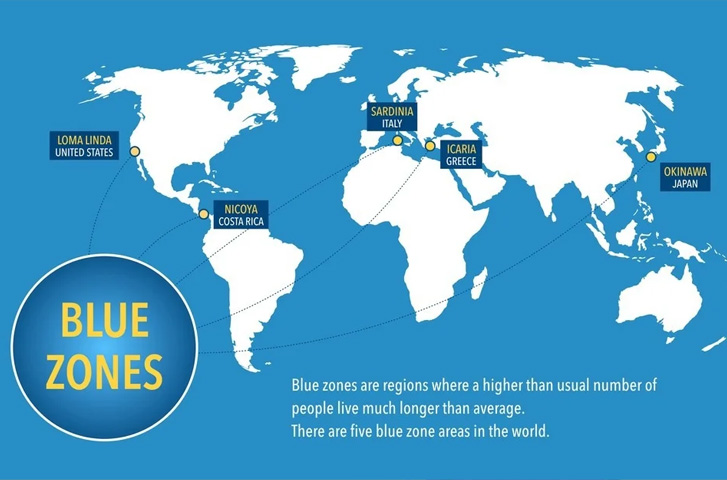
We have been hearing and reading a lot about Blue Zones. Blue zones are areas where people have a higher longevity (life expectancy) than people in other areas and most of the people living here live up to 100 years. These areas were discovered by American author, researcher and teacher Dan Buettner. He also researched the reasons behind these people living a healthy and long life for so many years.
In his research, he has said that the secret of living for 100 years is some factors like people’s diet, lifestyle and environment. The risk of chronic diseases is the lowest among the people here. Scientists believe that the diet of these people is a major reason for their longevity. These countries with blue zones include five zones, which include Okinawa in Japan, Ikaria in Greece, Sardinia, Nuoro province in Italy, Nicoya Peninsula in Costa Rica and Loma Linda in California. The diet of people in the Blue Zone is mostly plant-based and they consume meat, dairy, eggs and sugar minimally.
What are Blue Zones?
Blue Zones are areas where people have a longer lifespan and live longer with fewer diseases. People in the Blue Zone consume plant-based foods such as whole grains, nuts and legumes. Here minimal use of processed products is promoted. Meat and dairy products are also consumed but in limited quantities. Apart from nutritious food, regular exercise and careful eating habits are promoted in the daily routine of people here. That is, eat what you are eating after knowing about its nutrition and eat it properly.
Eating right
Research shows that the secret behind the longevity and avoidance of fatal diseases of the people of the Blue Zones is their strong digestive system and dietary choices. Along with eating right, they also focus on eating right. Okinawans stop eating when their stomachs are 80 percent full.
In a report some time ago, clinical nutritionist and chief dietician Dr. Manju P George explained the lifestyle of the Blue Zones, ‘Mindful eating, under which a person eats good food without any pressure and eats as much as his stomach is full. Mindful eating means being conscious about the food eaten. It focuses on what we are eating, when we are eating and how we are eating. Also, what benefits and harms will it have for the body. This can promote digestion. It is an ideal practice for food that keeps us stress-free and helps in maintaining hormonal balance.’
Find your Ikigai
It is important to note that the Blue Zone is not dependent on a diet. It is a lifestyle in itself that follows things like plant-based foods, nutritious eating and stress management. Health and fitness coach Divya Suhani explains, people in the Blue Zone often emphasize strong social ties, that is, they live together with the people around them. People in these areas live in close-knit groups where members support each other. They consider social connection an essential aspect that contributes to reducing stress levels and a sense of belonging.
Vocal for local
Suhani said, ‘The diet of the Blue Zone is based on the lifestyle of different places around the world, so it is not that any particular formula or diet will prove to be right for everyone. In the Blue Zone, the diet and routine have been decided according to the local culture and needs. Therefore, everyone should keep in mind their climate, routine and many other aspects related to their life. For example, Ayurveda, one of the oldest healing systems in India, is very popular. Ayurveda supports the consumption of plant-based food to maintain balance and health in the body.
It is important to note that the Blue Zones are not a diet. They are a lifestyle in themselves, which includes things like plant-based foods, nutritious eating and stress management. Health and fitness coach Divya Suhani explains, people in the Blue Zones often emphasize strong social ties, that is, they live in harmony with the people around them. People in these areas live in close-knit groups where members support each other. They consider social connection an essential aspect that contributes to reducing stress levels and a sense of belonging.


More Stories
Essential Oil For Skin[TKB Health]
Chia seeds will give double benefits [TKB Health]
Sunglasses Choosing Tips: Keep note before buying sunglasses, otherwise your eyes may get damaged! [TKB Health]